

| Breaking News Published: April 23, 2026 Author: NetNewsflix News Desk Reading Time: 8–9 minutes
The World Holds Its Breath
On April 22, 2026, as global markets trembled and diplomats scrambled behind closed doors, US President Donald Trump made a last-minute decision that prevented — at least temporarily — a return to full-scale war with Iran. The US-Iran ceasefire, which was set to expire today, has been extended. But make no mistake: this is not peace. The naval blockade continues, the Strait of Hormuz remains effectively shut, Iran’s leadership is fractured, and peace talks in Islamabad are hanging by a thread.
This article breaks down everything you need to know — what happened, why it happened, what both sides want, and what could come next. Whether you are following this story for the first time or have been tracking it for weeks, this is your complete guide to one of the most consequential geopolitical crises of our time.
Background: How Did We Get Here?
To understand today’s headlines, you need to go back to mid-2025. Tensions between the United States, Israel, and Iran had been escalating for years over Iran’s nuclear ambitions, its support for proxy groups like Hezbollah and Hamas, and its control over the strategically vital Strait of Hormuz.
In June 2025, the United States and Israel launched a major military operation — officially called “Operation Midnight Hammer” — targeting Iran’s nuclear facilities. Three sites were struck, including a key uranium enrichment plant. Trump declared the operation a “complete and total obliteration” of Iran’s nuclear infrastructure. However, a US intelligence assessment later revealed that only one of the three targeted sites was fully destroyed.
The war did not end there. It escalated. Iran retaliated, closed the Strait of Hormuz, and the global energy crisis that followed was described by the head of the International Energy Agency (IEA) as “the biggest crisis in history.” Oil prices surged past $100 per barrel. Shipping ground to a halt. Flight costs skyrocketed. And the world began demanding a diplomatic solution.
Enter Pakistan. Acting as a neutral mediator, Pakistan began facilitating back-channel communication between Washington and Tehran. Those efforts eventually produced a fragile two-week ceasefire, agreed upon on April 8, 2026. Now, two weeks later, that ceasefire was about to expire — and the world was watching to see what would happen next.
Trump’s Decision: Ceasefire Extended, But With Conditions
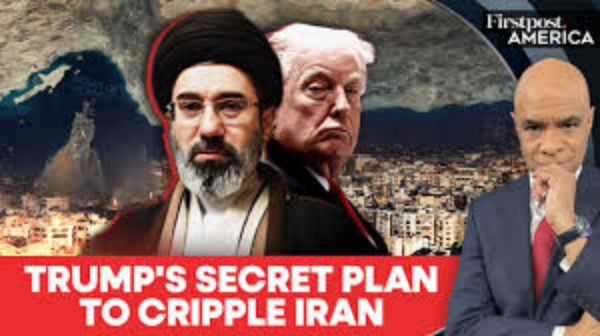
On April 21, just hours before the ceasefire deadline, President Trump posted on Truth Social announcing the extension. His words were measured but firm:
“I have directed our Military to continue the Blockade and, in all other respects, remain ready and able, and will therefore extend the Ceasefire until such time as their proposal is submitted, and discussions are concluded, one way or the other.”
Trump stated that the extension came at the request of Pakistani mediators. He said he expects the two sides to eventually reach a “great deal,” adding that Iran has “no choice” but to send a delegation to peace talks in Pakistan. At the same time, he made clear that if diplomacy fails, military action remains very much on the table.
Critically, this extension has no specific end date. It is open-ended, contingent on Iran producing a “unified proposal.” US officials told multiple media outlets that Trump has given Iran roughly three to five days to demonstrate genuine engagement before resuming attacks. That clock is ticking.
The Strait of Hormuz: Why It Matters So Much
If you want to understand why this conflict has shaken the entire world, look at the Strait of Hormuz — a narrow waterway between Iran and Oman through which an enormous share of the world’s oil supply flows. Iraq, Kuwait, the United Arab Emirates, Saudi Arabia, and Iran all export oil through this route to markets in Asia and Europe.
When the Strait closes, everything becomes more expensive. Oil prices rise. Fuel costs climb. Shipping insurance rates explode. Airlines pass the costs to passengers. Businesses that depend on imported goods face higher prices. Ordinary people feel it at the pump and in their wallets.
Since Iran reimposed “strict control” over the Strait in the wake of the conflict, maritime traffic has collapsed. According to Marine Traffic data, only 12 vessels crossed the Strait in the past 24 hours — a tiny fraction of normal traffic. Iran had designed a “controlled passage” route for commercial vessels, but even that has now been declared closed until the US naval blockade is lifted.
IEA chief Fatih Birol told France Inter radio that the Iran conflict has created “the biggest energy crisis in history.” Brent crude oil prices briefly climbed back above $101 per barrel on Tuesday — surging the moment markets feared the ceasefire might collapse. A campaign group called Transport & Environment (T&E) calculated that the spike in jet fuel prices has added an average of $104 to every long-haul flight departing from Europe.
The bottom line: until the Strait reopens, the economic pain will continue for the entire planet.
Iran’s Internal Crisis: A Government Divided Against Itself
One of the most important — and least discussed — factors in this crisis is what is happening inside Iran’s own government. According to US officials and multiple intelligence assessments, Tehran is deeply divided over how to handle the negotiations.
Iran’s civilian negotiating team, led by Parliament Speaker Mohammad Bagher Ghalibaf and Foreign Minister Abbas Araghchi, has shown some willingness to engage diplomatically. But the Islamic Revolutionary Guard Corps (IRGC) — Iran’s powerful military force — holds a very different view. The IRGC sees any negotiations as surrender and has reportedly blocked efforts to produce a unified position.
Adding to the complexity, Iran’s Supreme Leader Mojtaba Khamenei is reportedly injured and has had difficulty communicating with the rest of the government. This leadership vacuum has made it nearly impossible for Iran to speak with one voice — which is precisely why Trump demanded a “unified proposal” before agreeing to meaningful talks.
The fracture within Iran’s leadership showed in the mixed signals sent after the ceasefire extension was announced. One senior Iranian adviser called the extension “meaningless” and said Tehran should respond militarily. Iran’s UN envoy, on the other hand, said he believes talks can happen if the US lifts its blockade. These are two completely contradictory positions — and that contradiction is at the heart of why this crisis is so difficult to resolve.
What Does the US Want? What Does Iran Want?
At the core of this standoff are two sets of demands that are almost entirely incompatible — at least for now.
The United States is demanding:
- A complete and permanent end to Iran’s nuclear program, including all uranium enrichment
- Strict limits on Iran’s ballistic missile production and stockpiles
- The immediate reopening of the Strait of Hormuz to restore global oil flow
- An end to Iran’s financial and military support for Hezbollah, Hamas, and other regional proxy forces
- The removal of all highly enriched uranium from Iranian territory — a process Trump himself described as “long and difficult”
In return, the US has offered sanctions relief and the prospect of normalized economic relations.
Iran’s position is:
- Uranium enrichment is a sovereign right and a non-negotiable red line
- Iran’s military capabilities and regional alliances are not bargaining chips
- The US naval blockade of Iranian ports is itself a violation of the ceasefire and an “act of war”
- Iran will not negotiate “under threat” or military pressure
- Any final agreement must include security guarantees against future US or Israeli aggression, war reparations, and international recognition of Iranian sovereignty over the Strait of Hormuz
These positions are miles apart. Bridging them will require creative diplomacy, significant compromise from both sides, and time — none of which are in abundant supply right now.
JD Vance’s Pakistan Trip: Called Off for Now
One of the clearest signs of just how uncertain the situation remains is the cancellation of Vice President JD Vance’s planned trip to Islamabad. Vance was set to lead a US delegation — alongside special envoy Steve Witkoff and senior adviser Jared Kushner — to meet with Iranian officials in Pakistan’s capital.
The trip was called off because, as of Tuesday evening, Iran had not confirmed whether it would send a delegation to the talks. Pakistan’s Information Minister Attaullah Tarar confirmed on social media that “a formal response from the Iranian side about confirmation of delegation to attend Islamabad Peace Talks is still awaited.”
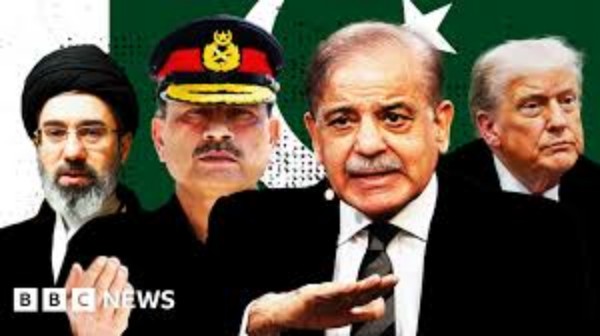
Pakistan, for its part, has continued to play the role of patient mediator. Prime Minister Shehbaz Sharif publicly thanked Trump for the ceasefire extension and expressed hope that both sides would remain committed to dialogue. The next round of talks — if they happen — will again be hosted in Islamabad.
Pakistan’s Role: More Than Just a Middleman
Pakistan’s involvement in this crisis is not incidental — it is strategic, and it reflects Pakistan’s unique position as a country with relationships on multiple sides of this conflict.
Pakistan shares a long border with Iran and has significant economic and energy ties with Tehran. At the same time, Pakistan has a strong relationship with the United States, which provides it with substantial economic and military cooperation. This dual positioning made Pakistan one of the few countries trusted by both Washington and Tehran to facilitate communication.
Pakistan delivered the US “15-point proposal” to Iran in late March. It co-sponsored a “5-point peace initiative” with China calling for an immediate cessation of hostilities and the resumption of humanitarian aid. And it hosted the first round of direct US-Iran negotiations in Islamabad in April — the first such talks in years.
For Pakistan, a successful peace deal would be transformative. It would stabilize the region, potentially lower energy costs, ease the economic burden caused by the oil crisis, and establish Pakistan as a serious diplomatic player on the world stage.
The Lebanon Front: A Second Crisis Simmering
While the world’s attention has been focused on Iran, the situation in Lebanon has remained dangerously tense — a reminder that this conflict has multiple fronts.
Hezbollah, the Iran-backed militant group, has reaffirmed what it calls a “cautious commitment” to a fragile ceasefire with Israel. But that ceasefire is being tested daily. Hezbollah has accused Israel of attacking civilians and residential buildings in southern Lebanon. Israel’s military maintains that every structure it targets is part of Hezbollah’s military infrastructure and therefore not covered by the truce.
French President Emmanuel Macron visited Lebanon and met with Prime Minister Nawaf Salam, pledging French support for Lebanon’s preparation for formal talks with Israel. The next round of Israel-Lebanon negotiations is scheduled to take place in Washington. Lebanon’s government has been clear: it does not seek confrontation with Hezbollah, but it will not be intimidated either.
Meanwhile, UK police have announced an investigation into a string of arson attacks on Jewish sites in London, which authorities believe may be linked to Iranian proxy networks — a sign that the conflict’s reach extends far beyond the Middle East.
Key Events: A Timeline of the Crisis
To put everything in context, here is a brief timeline of how this situation developed:
- June 2025: US and Israel launch Operation Midnight Hammer, striking Iran’s nuclear sites. War begins.
- Late 2025 – Early 2026: Iran closes the Strait of Hormuz. Global energy crisis begins. Diplomatic back-channels open.
- March 25, 2026: Pakistan delivers the US “15-point proposal” to Iran.
- March 31, 2026: Pakistan and China present a joint “5-point peace initiative.”
- April 8, 2026: US and Iran agree to a two-week ceasefire, mediated by Pakistan.
- April 11, 2026: JD Vance, Witkoff, and Kushner travel to Islamabad for the first round of peace talks.
- April 19, 2026: The US seizes an Iranian-flagged cargo ship in the Strait of Hormuz. Tensions spike.
- April 21, 2026: Trump extends the ceasefire. JD Vance’s Pakistan trip is canceled. Iran remains divided.
- April 22, 2026: A container ship is attacked in the Strait. Iran seizes two additional vessels. Diplomacy continues — barely.
What Happens Next? Three Possible Scenarios
Looking ahead, there are three broad scenarios that analysts and policymakers are watching closely.
Scenario One — A Deal Is Reached: Iran produces a unified proposal, both sides make meaningful concessions, the Strait of Hormuz is reopened, and a permanent peace agreement is signed. This is the best-case scenario. Oil prices would fall, global markets would stabilize, and the Middle East would enter a new — if fragile — chapter. It is possible, but it requires both sides to move significantly from their current positions.
Scenario Two — A Frozen Conflict: The open-ended extension allows Iran to drag out negotiations indefinitely. No deal is reached, but no major escalation occurs either. The Strait remains partially closed, oil prices stay elevated, and the world adjusts to a new “normal” of chronic instability in the Persian Gulf. This is perhaps the most likely outcome in the short term.
Scenario Three — A Breakdown: Iran fails to produce a proposal. Trump resumes military strikes. Incidents in the Strait escalate into full-scale naval confrontation. This is the worst-case scenario — and given that two ships were attacked in the Strait on April 22 alone, it is not a remote possibility.
The Council on Foreign Relations has suggested one potential path forward: rather than trying to solve everything at once, both sides could agree first to reopen the Strait of Hormuz — since both the US and Iran are technically keeping it closed, neither side would lose face by opening it simultaneously. This confidence-building measure could create the conditions for a broader deal.
Conclusion: The World at a Crossroads
April 22, 2026 is a day that will be studied in history books — either as the moment diplomacy stepped back from the brink of catastrophe, or as the calm before an even greater storm.
The ceasefire extension buys time. But time alone does not produce peace. Peace requires political will, compromise, and the courage to make difficult concessions — on both sides. Iran needs to produce a unified negotiating position. The United States needs to consider whether an open-ended blockade actually helps or hinders its goals. And the rest of the world — including Pakistan, China, France, and the UN — needs to keep the diplomatic pressure on.
What is certain is that the stakes could not be higher. The Strait of Hormuz, global oil markets, the futures of millions of people in Iran, Lebanon, Israel, and beyond — all of it hangs in the balance. The coming days and weeks will determine whether the world gets a deal, a stalemate, or something far worse.
NetNewsflix will continue covering this story as it develops. Bookmark this page and turn on notifications to stay informed.
Tags: US Iran War 2026, Iran Ceasefire Extended, Strait of Hormuz Crisis, Trump Iran Deal, Pakistan Peace Talks, JD Vance Islamabad, Middle East Conflict, Oil Crisis 2026, World News Today, Breaking News, NetNewsflix
© 2026 NetNewsflix.com — All Rights Reserved

Ali Nasir is a news writer and journalist at NetNewsflix, covering global affairs, geopolitics, and breaking world news. With a sharp eye for detail and a passion for keeping readers informed, Ali breaks down complex international stories — from Middle East conflicts to global economic crises — into clear, compelling reporting that matters.