


Television has changed dramatically over the last two decades. Traditional cable and satellite TV are no longer the only ways to watch live channels, movies, and shows. One of the most significant shifts in how people consume television content is the rise of IPTV, or Internet Protocol Television.
IPTV allows users to watch TV content over the internet rather than traditional broadcast methods. As internet speeds improve and smart devices become more common, IPTV continues to grow in popularity worldwide. Many people search for IPTV to understand how it works, whether it is legal, what devices support it, and whether it is better than cable or popular streaming platforms.
This guide provides a complete, easy-to-understand explanation of IPTV, including how it works, its features, advantages, disadvantages, legal considerations, and what users should look for when choosing a service.
What Is IPTV?
Definition of IPTV (Internet Protocol Television)
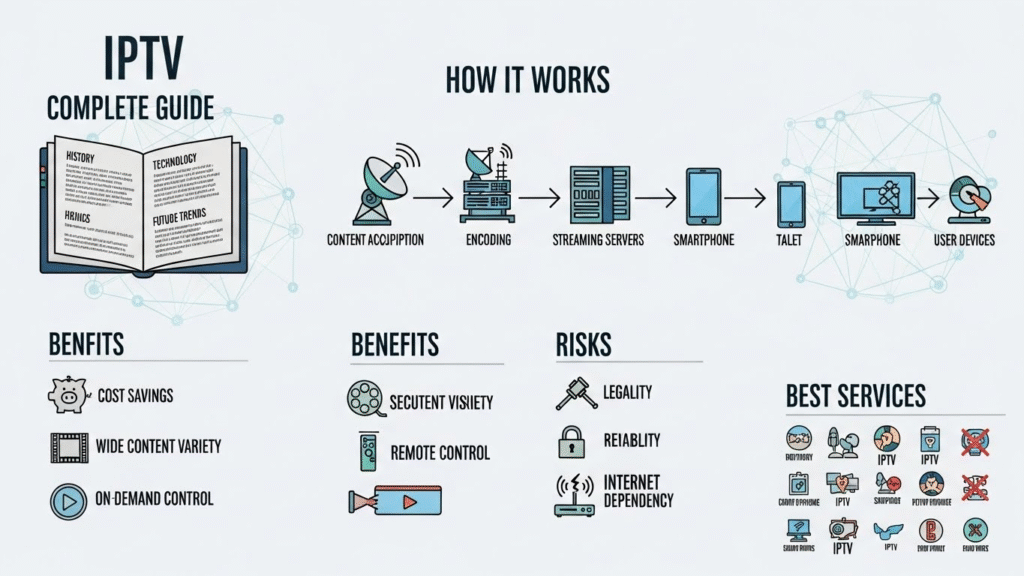
IPTV (Internet Protocol Television) is a system that delivers television content over the internet rather than through traditional cable, satellite, or terrestrial signals. Instead of receiving TV signals via antennas or satellite dishes, IPTV streams content using IP-based networks, similar to how websites and online videos work.
In simple terms, IPTV uses the internet to:
- Stream live TV channels
- Provide on-demand movies and shows
- Offer time-shifted content such as catch-up TV
Because IPTV relies on internet connectivity, users can access content on multiple devices, including smart TVs, smartphones, tablets, computers, and streaming boxes.
Types of IPTV Services
IPTV services generally fall into three main categories:
Live TV IPTV
This type of IPTV streams television channels in real time, similar to traditional TV broadcasts. Users can watch news, sports, and entertainment channels as they air.
Video on demand (VOD)
VOD allows users to select movies or TV shows from a library and watch them at any time. This is similar to how popular streaming platforms work, but offered within an IPTV system.
Time-Shifted TV (Catch-Up TV)
Time-shifted IPTV lets users watch programs that aired earlier. This is useful for people who missed a live broadcast and want to watch it later.
How Does IPTV Work?
IPTV Technology Explained
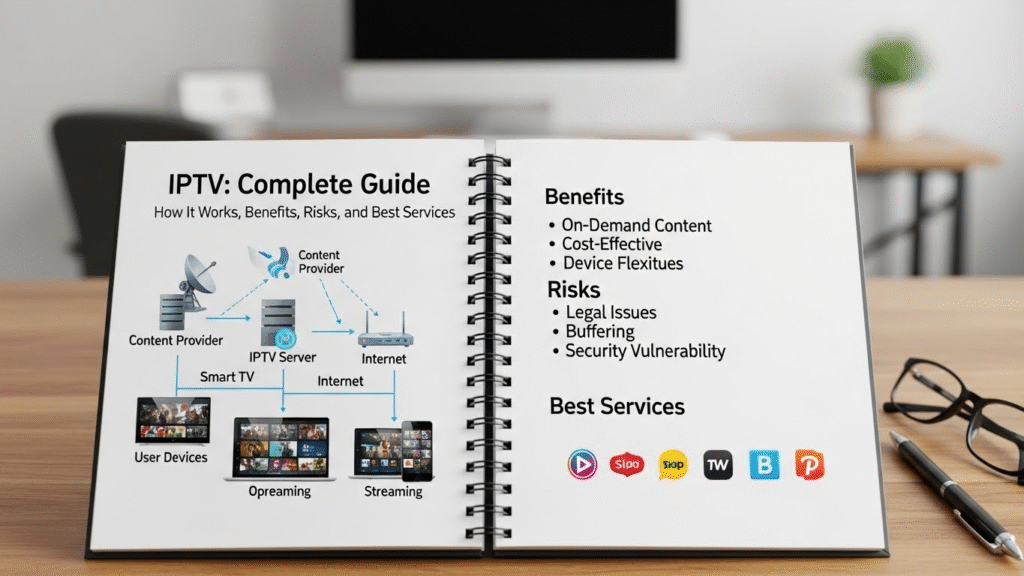
IPTV works by sending video and audio data over Internet Protocol networks. Instead of broadcasting content to everyone at the same time, IPTV streams content directly to individual users upon request.
The basic process includes:
- Content is stored on servers
- Data is compressed into digital packets
- Packets are delivered through an internet connection
- The user’s device decodes and displays the content
This method allows IPTV to offer greater flexibility, such as pausing, rewinding, and choosing specific programs.
IPTV vs Cable vs Satellite TV
Cable TV
- Uses coaxial cables
- Fixed channel packages
- Limited on-demand options
Satellite TV
- Requires a satellite dish
- The signal can be affected by the weather
- Limited portability
IPTV
- Uses an internet connection
- More flexible viewing
- Supports multiple devices
- Offers live, on-demand, and catch-up content
IPTV’s most significant advantage is its flexibility, while traditional TV relies on fixed infrastructure and schedules.
Key Features of IPTV
Channel Variety and Content Options
One of IPTV’s biggest attractions is its wide range of content. Depending on the service, users may have access to:
- Local and international TV channels
- Sports channels
- News networks
- Entertainment and kids’ programming
- Movies and series libraries
This variety makes IPTV appealing to users with diverse viewing preferences.
Video Quality and Streaming Performance
IPTV supports multiple video resolutions, including:
- Standard Definition (SD)
- High Definition (HD)
- Full HD
- 4K Ultra HD (on supported devices and connections)
Video quality depends on factors such as internet speed, server stability, and device capabilities. A stable internet connection is essential for smooth playback.
Device Compatibility
One of IPTV’s strengths is its compatibility with many devices, including:
- Smart TVs
- Android and iOS smartphones
- Tablets
- Computers and laptops
- Streaming devices and TV boxes
This allows users to watch content at home or on the go.
IPTV Use Cases and Who They’re For
IPTV for Sports Fans
Sports fans are often drawn to IPTV because of:
- Live sports coverage
- Access to international sports channels
- Multiple event options
IPTV can provide flexibility for viewers who want to follow different leagues or sports from around the world.
IPTV for Movies and TV Shows
Many IPTV services include on-demand libraries featuring:
- Movies
- TV series
- Documentaries
This appeals to viewers who prefer choosing what to watch instead of following fixed schedules.
IPTV for International Viewers
IPTV is beneficial for international audiences because it often includes:
- Regional channels
- Foreign language programming
- Cultural content from different countries
This makes IPTV attractive to people living abroad who want access to channels from their home country.
How to Set Up IPTV
IPTV Requirements
To use IPTV, users typically need:
- A stable internet connection
- A compatible device
- An IPTV application or player
- Access to a legitimate IPTV service
Internet speed requirements vary depending on video quality, but higher resolutions require faster connections.
How IPTV Apps and Players Work
IPTV players are applications that allow devices to display IPTV streams. These apps do not usually provide content themselves; instead, they act as media players for IPTV services.
Common features include:
- Channel lists
- Program guides
- Playback controls
Users should ensure that the IPTV service they choose is legal and reliable.
Is IPTV Legal and Safe?
Legal IPTV vs Illegal IPTV
IPTV technology itself is legal. However, legality depends on whether the service has proper licenses to distribute content.
Legal IPTV services:
- Have broadcasting rights
- Partner with content providers
- Operate transparently
Illegal IPTV services:
- Distribute copyrighted content without permission
- Often lacks customer support
- Can disappear without notice
Users should always verify that an IPTV service operates legally in their region.
Safety and Privacy Concerns
Safety concerns with IPTV may include:
- Poor data protection practices
- Unreliable services
- Malware risks from untrusted sources
To stay safe:
- Use reputable providers
- Avoid suspicious downloads
- Keep devices updated
Pros and Cons of IPTV
Advantages of IPTV
IPTV offers several benefits:
- Flexible viewing options
- Access to a wide range of content
- Multi-device compatibility
- Often more customizable than traditional TV
These advantages make IPTV appealing to modern viewers.
Disadvantages of IPTV
Despite its benefits, IPTV also has drawbacks:
- Depends heavily on the internet quality
- Buffering may occur with slow connections
- Service quality varies between providers
- Legal risks with unlicensed services
Understanding these limitations helps users set realistic expectations.
Best IPTV Services (Overview)
What to Look for in an IPTV Provider
When evaluating IPTV services, users should consider:
- Content availability
- Streaming reliability
- Customer support
- Transparency and legality
- User reviews
A reliable provider should clearly explain what it offers and how it operates.
Free vs Paid IPTV Services
Free IPTV services
- Often limited in quality
- May be unreliable
- Higher safety and legal risks
Paid IPTV services
- Better performance
- More consistent support
- Clearer service terms
Paid options generally provide a more stable experience.
IPTV Troubleshooting and Common Problems
IPTV Buffering and Lag Issues
Buffering is one of the most common IPTV problems. Causes may include:
- Slow internet speeds
- Network congestion
- Server overload
Improving internet stability often helps reduce buffering.
IPTV Not Working or Channels Not Loading
Common reasons IPTV may stop working include:
- Server maintenance
- App compatibility issues
- Device software updates
Restarting the app or checking the connection may resolve these problems.
IPTV vs Streaming Services (Netflix, Hulu, etc.)
Content Differences
Streaming platforms focus mainly on on-demand content, while IPTV often includes:
- Live TV channels
- News and sports
- Real-time broadcasts
Each option serves different viewing preferences.
Cost Comparison
Streaming services usually charge monthly fees for specific libraries, while IPTV pricing depends on:
- Channel packages
- Content volume
- Service quality
Costs can vary widely between providers.
Which Option Is Better for Different Users?
- IPTV may suit users who want live TV and international channels
- Streaming platforms are ideal for movies and original series
The best choice depends on viewing habits.
People Also Ask (FAQs)
What does IPTV stand for?
IPTV stands for Internet Protocol Television, which delivers TV content through the internet.
Is IPTV legal in my country?
IPTV legality depends on the service provider and local laws. Users should verify licensing and compliance.
Do I need a VPN for IPTV?
A VPN is not required for IPTV itself, but some users choose to use one for privacy reasons, depending on local regulations.
What internet speed is required for IPTV?
Internet speed requirements depend on video quality; higher resolutions require faster connections.
Can I watch live TV with IPTV?
Yes, live TV is one of IPTV’s main features.
Why does IPTV keep buffering?
Slow internet speeds, unstable connections, or overloaded servers usually cause buffering.
What devices support IPTV?
IPTV works on smart TVs, mobile devices, computers, and various streaming devices.
Future of IPTV
IPTV Trends and Innovations
The future of IPTV includes:
- Higher video resolutions
- Improved streaming technology
- Smarter content recommendations
As internet infrastructure improves, IPTV services are expected to become more advanced.
IPTV and the Shift Away from Traditional TV
More viewers are moving away from traditional TV toward internet-based options. IPTV plays a significant role in this shift by offering flexibility and choice.
Final Thoughts on IPTV
IPTV represents a significant change in how people access television content. By using the internet instead of traditional broadcast methods, IPTV offers flexibility, variety, and convenience that many viewers appreciate.
However, users should be careful to choose legal and reputable IPTV services to ensure safety, quality, and compliance with the law. Understanding how IPTV works, its advantages, and its limitations helps viewers decide whether it fits their needs.
As technology continues to evolve, IPTV is likely to remain an essential part of the modern entertainment landscape.

Welcome to NewsNetFlix! I’m Ali Nasir, an AI-Powered SEO, and Content Writer with 2 years of experience.