

By NetNewsFlix Staff | Travel | Reading Time: 8 minutes
Some journeys are not just about covering distance — they change something inside you. That’s exactly what happened when my three friends and I — Usman, Bilal, and Zara — packed our bags, filled the tank, and pointed the car north. Our destination? The silent, towering, breathtaking world hidden in the heart of Pakistan, all the way to the Chinese border.
This wasn’t just a road trip. It was a dream we had been postponing for years — and the moment we finally lived it.
Day One: Lahore to Rawalpindi — The Journey Begins
We left Lahore at 4 AM. The motorway was quiet, the air was cool, and the thermos of chai kept us going. We stopped briefly in Rawalpindi for a proper desi breakfast — eggs, parathas, and lassi — before jumping onto the Hazara Motorway toward Abbottabad.
As we neared Abbottabad, the temperature dropped, and the chaos of the city faded behind us. Abbottabad itself is a charming town — lined with fruit orchards, clean roads, and the proud silhouette of the Kakul Military Academy standing on the hills.
From here, the real adventure began.
Naran: Where Your Eyes Don’t Want to Blink
A Bit of History: Naran sits in the Kaghan Valley, stretching along the banks of the Kunhar River. During the Mughal era, this region was a royal hunting ground — emperors would escape here during the summer. Under British rule, colonial officers made Naran their summer retreat, and a few old rest houses from that period still stand today as quiet reminders of a different time.
What to See:
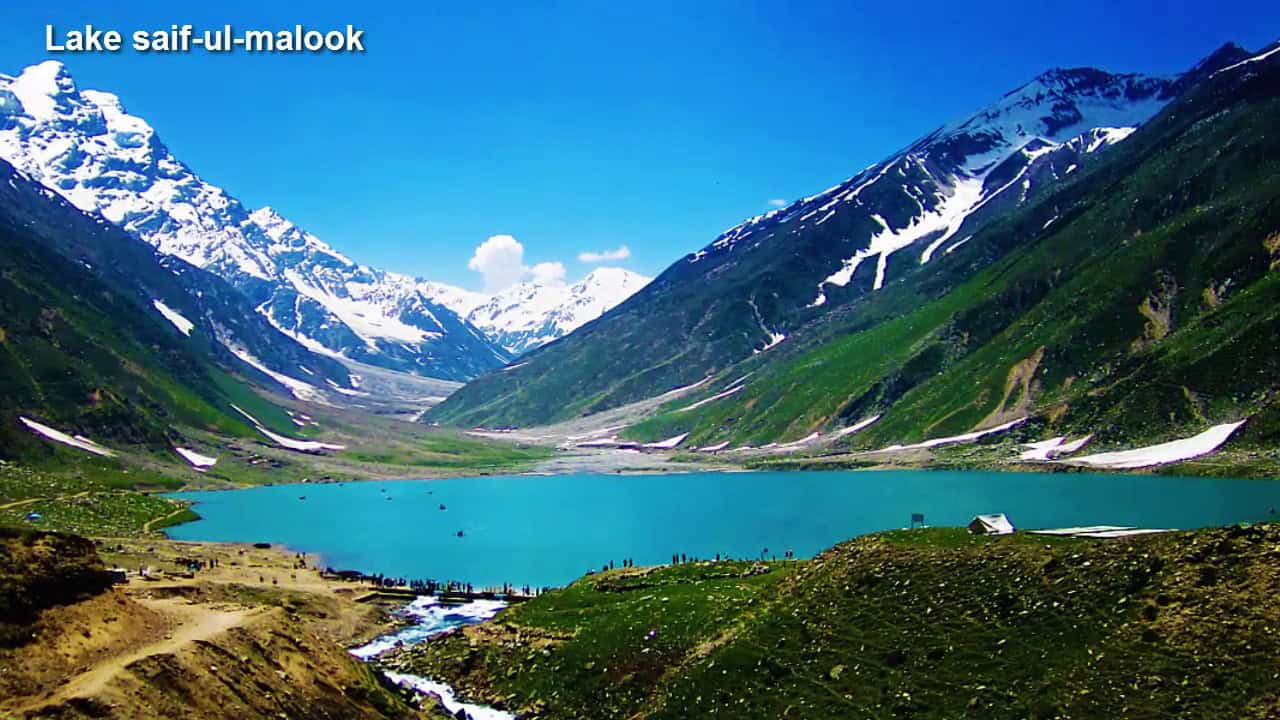
- Saif ul Malook Lake: At 3,224 meters above sea level, this glacial lake is something you cannot describe with words — you just have to stand there and let it sink in. The famous Sufi poet Mian Muhammad Bakhsh wrote his legendary romantic poem “Saif ul Malook” inspired by this very place — a story of a prince who fell in love with a fairy who lived in this lake. You can reach it by horse or jeep, as the trail is steep and narrow.
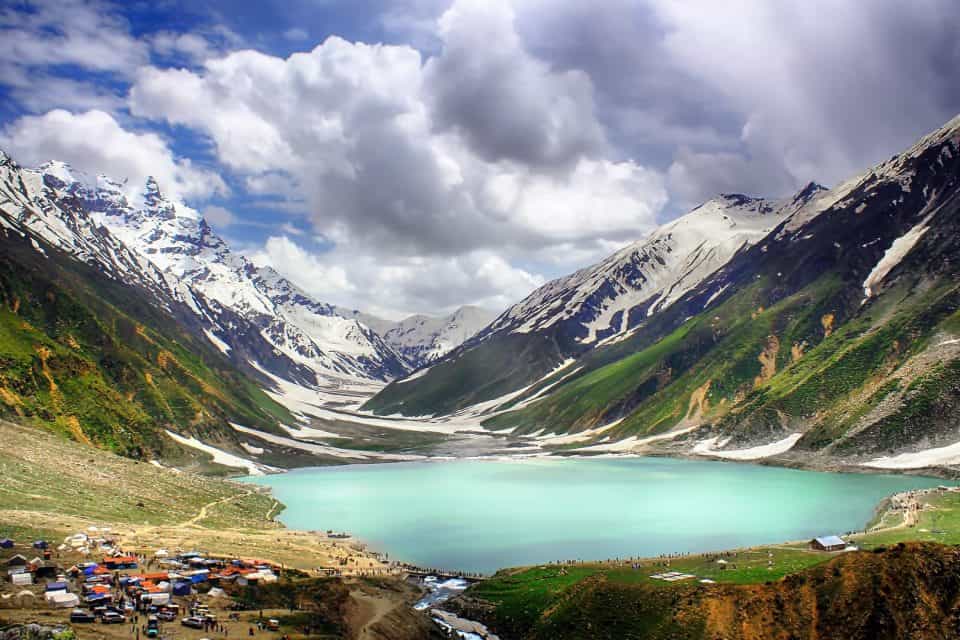
- Lulusar Lake: Further north toward Babusar Top, this mirror-like lake reflects the surrounding peaks so perfectly that you genuinely cannot tell where the mountain ends, and the water begins.
- Camping by the River: We spent one night camping right next to the Kunhar River. None of us could sleep — the stars were so close it felt like you could reach up and touch them.
Personal Moment: Bilal — who normally never stops talking — went completely silent when he first saw Saif ul, Malook. After about ten minutes, he turned to us and said, “Now I understand why people chase mountains instead of resorts.”
Babusar Top: The Pass That Divides Two Worlds
Babusar Top stands at 4,173 meters (13,691 feet) — a natural gateway between Kaghan Valley and Gilgit-Baltistan. Crossing it feels like stepping into a completely different country.
The road is narrow and slippery after rain, but the views make every nerve-wracking turn worth it. On one side, lush green valleys. On the other hand, dramatic rocky peaks are draped in snow. On a clear day, you can catch a glimpse of Nanga Parbat — 8,125 meters tall, the 9th highest peak in the world — watching over everything like a giant guardian.
Important Note: Babusar Top is only accessible from July to October. The rest of the year, it is buried under heavy snowfall. We traveled in August — perfect timing.
A Small Disaster: One of our jeep tyres went flat right at the top. It took half an hour to fix — but that half hour gave us the most uninterrupted view of our entire trip. No camera did it justice. It lives only in our memory.
Chilas: A Town Older Than History
As you descend from Babusar, the landscape transforms completely. The green valleys disappear, and you enter the Indus Valley — rocky, dry, and dramatic in its own ancient way.
Historical Significance: Chilas was a major stopover on the ancient Silk Road. Caravans traveling between China, Central Asia, and South Asia would rest here for centuries. The region contains over 50,000 petroglyphs — rock carvings dating back to 5,000 BCE — depicting Buddhist symbols, hunting scenes, animals, and prehistoric human figures. It is essentially an open-air museum that most tourists walk right past without realizing what they are looking at.
We spent the night in Chilas. The hotel was simple, but falling asleep to the sound of the Indus River rushing outside the window felt like the most natural thing in the world.
Gilgit: The Heart of the Mountains
The drive from Chilas to Gilgit follows the Karakoram Highway — one of the greatest engineering achievements in human history. Built jointly by Pakistan and China between 1959 and 1978, the KKH cuts through three of the world’s mightiest mountain ranges. Its construction cost the lives of 810 Pakistani and 82 Chinese workers — every bend in this road is a tribute to their sacrifice.
About Gilgit City: Gilgit is the capital of Gilgit-Baltistan. Historically, it was a critical node on the Silk Road where Chinese, Central Asian, and South Asian civilizations converged. Cultural diversity is still visible today in the food, the faces, and the festivals.
Must-Visit Spots in Gilgit:
- Kargah Buddha: A few kilometers outside the city, carved into a cliff face in the 7th century — a massive Buddha figure that reminds you this region was once a thriving center of Buddhist civilization long before Islam arrived.
- Gilgit Bazaar: Dried apricots, local Chitrali caps, Hunza water, handmade wooden crafts — shopping here is an experience in itself.
- Naltar Valley: About 40 km from Gilgit, this hidden valley has three lakes of different colors and a ski resort that operates in winter. We spent a full day here,e and leaving was genuinely painful.
Personal Moment: Usman bought some apricot oil from a tiny shop in Gilgit bazaar. The shopkeeper spent an entire hour telling us the history of the region over green tea. We all sat down and listened. That conversation was worth more than any museum.
Hunza Valley: The Closest Thing to Paradise
Just two hours from Gilgit, Hunza Valley hits you like a dream you didn’t expect to have.
History of Hunza: Hunza was an independent princely state ruled by a “Mir” until 197,4 when it was formally merged into Pakistan. During the Silk Road era, the people of Hunza were actually notorious for raiding trade caravans passing through — until the British finally negotiated a settlement. Today, Hunza is known worldwide for something far more peaceful: the extraordinary longevity of its people. Researchers have long studied the Hunzas’ population, attributing their long,g healthy lives to the local water, diet of fresh apricots and dried fruits, and active lifestyle.
What to See:
- Baltit Fort: The crown jewel of Hunza. Built over 700 years ago with Tibetan-influenced architecture, this UNESCO-recognized heritage fort sits high above the valley and has been carefully restored. At nig, ht when it is lit up, it looks like something from a fairy tale.
- Altit Fort: Even older than Baltit, this 900-year-old fort clings to a cliff above the Hunza River. Walking through it feels like time travel.
- Attabad Lake: Born from a catastrophic landslide in 2010 that buried an entire village, this turquoise lake is hauntingly beautiful. The boat ride across it is absolutely mandatory — the color of the water is something that doesn’t exist on any color chart.
- Rakaposhi Viewpoint: The 7,788-meter Rakaposhi peak is viewed from the roadside viewpoint, with a small tea stall right there. Sip chai, stare at one of the world’s highest mountains. Life doesn’t get simpler or better than this.
Khunjerab Pass: Standing at the Top of the World
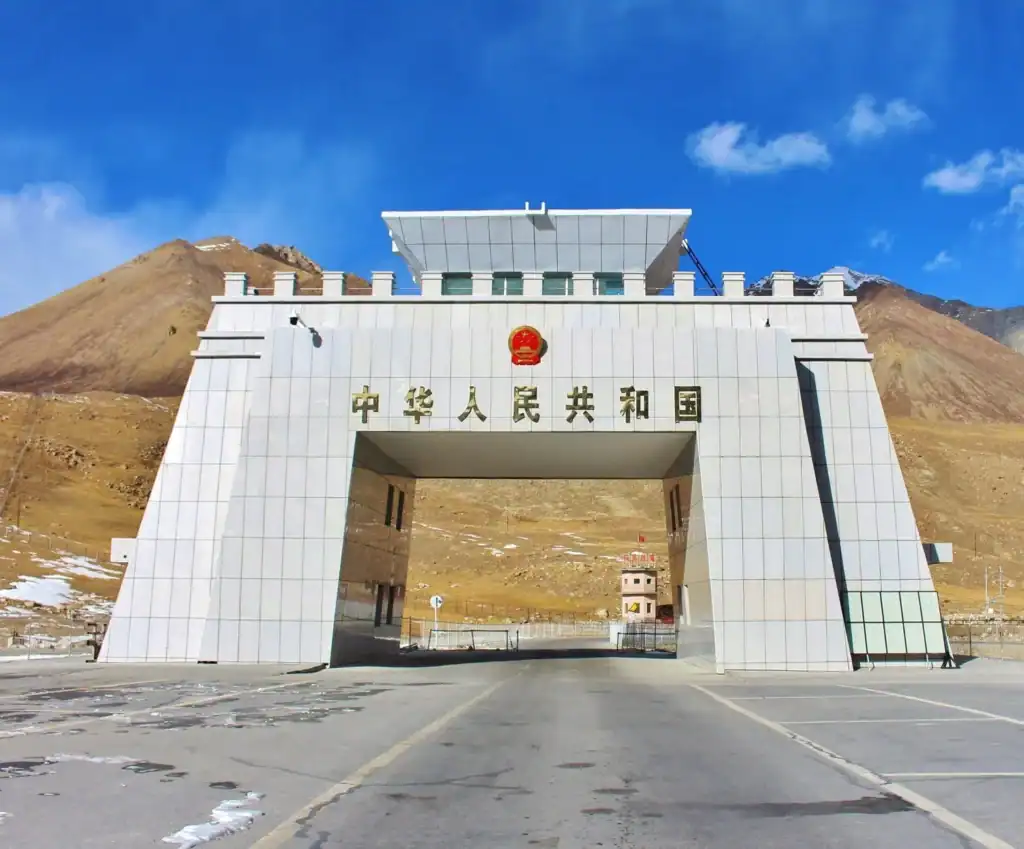
This was the moment we had been building toward the entire trip.
Khunjerab Pass — 4,693 meters (15,397 feet) — is the highest paved international border crossing in the world, where Pakistan and China meet.
Historical Significance: The name “Khunjerab” literally translates to “Valley of Blood” — a testament to how dangerous this pass was in ancient times. Silk Road caravans dreaded crossing it due to bandits and brutal weather. Today, that same treacherous route is a symbol of friendship and trade between the two nations.
Getting There: You need to get a permit from the checkpoint at Sust village. As you drive up the KKH, the landscape becomes completely lunar — snow-capped peaks on every side, no trees, no buildings, just silence and stone and sky.
Standing at the border marker, looking at Pakistan on one side and China on the other, something shifts inside you. It is hard to explain. You feel very small and very alive at the same time.
Bilal looked at us and said, “Guys. We’re actually here.”
Nobody responded. Nobody needed to.
Wildlife Encounter: Khunjerab National Park is home to yaks and the rare Marco Polo sheep. We spotted two yaks sitting calmly in the middle of the road. They did not move. We gave them the right of way — they had clearly been here longer than us.
Practical Travel Guide
| Detail | Info |
|---|---|
| Best Time to Travel | June – September |
| Total Distance from Lahore | ~1,200 km |
| Recommended Duration | 10–14 days |
| Best Transport | Private car or hired jeep |
| Budget (per person) | PKR 40,000 – 70,000 (hotels, food, fuel) |
| Khunjerab Permit | Required — obtain at Sust Checkpoint |
Pack These Essentials:
- Warm clothes (even in August, nights are freezing)
- Cash (ATMs are limited after Gilgit)
- Altitude sickness medication
- Offline maps (signal is weak in most areas)
- Power bank and extra batteries
Final Thoughts
On the drive back to Lahore, the four of us were quiet for most of the journey. But it wasn’t an empty silence — it was full. Full of everything we had seen, everything we had felt, and everything we now understood about this country that we thought we already knew.
Pakistan holds something that very few places on earth can offer: three of the world’s greatest mountain ranges — the Karakoram, the Himalayas, and the Hindu Kush — meeting in one place. And nestled between those peaks are people who will offer you tea before they know your name, share their history without being asked, and smile at a stranger like an old friend.
If you haven’t done this trip, you haven’t truly seen Pakistan.
And once you do it, you’ll spend the rest of your life planning to go back.
Have you traveled to Northern Pakistan? Share your experience in the comments below!

Ali Nasir is a news writer and journalist at NetNewsflix, covering global affairs, geopolitics, and breaking world news. With a sharp eye for detail and a passion for keeping readers informed, Ali breaks down complex international stories — from Middle East conflicts to global economic crises — into clear, compelling reporting that matters.