


Quick Summary
IPTV (Internet Protocol Television) ek modern system hai jisme TV channels aur movies internet ke through stream hoti hain. Is guide me aapko IPTV ka complete system, benefits, risks, legality, aur safe IPTV choose karne ka best method milay ga.
What is IPTV?
IPTV ka full form Internet Protocol Television hai. Simple words me, IPTV ka matlab hai ke aap traditional cable ya satellite ke bajaye internet connection se TV channels, live sports, movies, aur shows dekhte ho.
Aaj kal IPTV bohat popular ho raha hai kyun ke:
- monthly cost kam hoti hai
- channels zyada milte hain
- mobile aur smart TV dono pe chal jata hai
- on-demand content available hota hai
How IPTV Works? (Simple Explanation)
IPTV ka system bilkul Netflix aur YouTube jaisa hai, bas difference ye hai ke IPTV me live channels bhi milte hain.
IPTV ka working process:
- IPTV provider content (channels/movies) ka server pe upload karta hai
- User subscription leta hai
- User app install karta hai (Smart TV / Mobile / PC)
- Server se stream direct internet pe chalti hai
- User ko live TV aur VOD (Video on Demand) access mil jata hai
IPTV vs Cable vs Streaming (Comparison Table)
| Feature | IPTV | Cable TV | Netflix/Streaming |
|---|---|---|---|
| Internet Required | Yes | No | Yes |
| Live Channels | Yes | Yes | Limited |
| Monthly Cost | Low to Medium | High | Medium |
| Movies/Series | Yes | Limited | Yes |
| Sports Coverage | Mostly available | Yes | Limited |
| Device Support | Mobile/TV/PC | TV only | Mobile/TV/PC |
| Legal Risk | Depends on provider | No | No |
Types of IPTV Services
IPTV ke different types hotay hain:
1) Live IPTV
Isme aap live TV channels dekh sakte ho jaise news, sports, drama, etc.
2) VOD (Video on Demand)
Isme Netflix style movies aur series ka collection hota hai.
3) Time-Shifted IPTV
Isme aap past shows ko replay kar sakte ho, jaise “catch-up TV”.
Benefits of IPTV
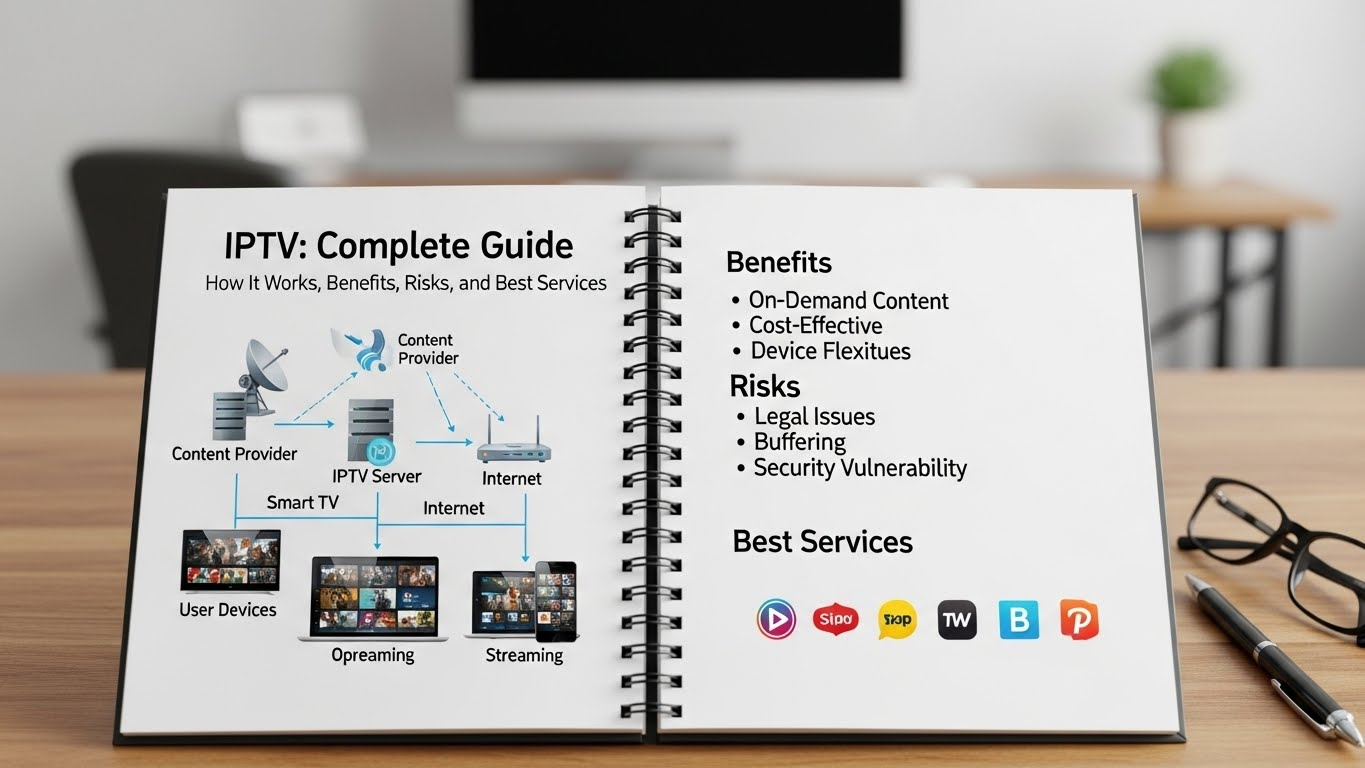
IPTV ke kuch strong benefits ye hain:
✅ 1) Low Price with More Channels
Cable TV ke comparison me IPTV cheap hota hai aur channels bhi zyada hotay hain.
✅ 2) Works on Multiple Devices
Aap IPTV ko:
- Smart TV
- Android TV box
- Mobile
- Laptop
- Tablet
sab pe use kar sakte ho.
✅ 3) HD and 4K Streaming
Agar internet speed achi ho to IPTV HD aur 4K quality me bhi chal jata hai.
✅ 4) Huge Content Library
Zyada IPTV services me movies, series, sports, kids channels sab kuch hota hai.
✅ 5) Easy Setup
Most cases me bas app install karo aur login details add karo, done.
Risks of IPTV (Important to Know)
IPTV ke benefits ke sath kuch risks bhi hotay hain.
⚠️ 1) Illegal IPTV Services
Bohat se IPTV providers unlicensed hotay hain. Matlab channels ka right unke paas nahi hota.
⚠️ 2) Security Issues
Some IPTV apps malware ya spyware carry kar sakti hain, especially APK files.
⚠️ 3) Buffering Problem
Agar internet slow ho ya provider server weak ho to buffering bohat hoti hai.
⚠️ 4) Sudden Shutdown
Illegal IPTV services kabhi bhi band ho sakti hain aur subscription waste ho jata hai.
⚠️ 5) Payment Risk
Untrusted providers payment details misuse kar sakte hain.
Is IPTV Legal or Illegal?
Ye sab se important question hai.
✅ IPTV Legal hota hai agar:
- Provider ke paas official license ho
- channels ke streaming rights purchased hon
- service transparent ho (website, customer support, policies)
❌ IPTV Illegal hota hai agar:
- provider pirated channels stream kare
- suspicious pricing ho (lifetime cheap deals)
- channels ka source unknown ho
📌 Simple rule:
IPTV itself legal technology hai, illegal provider illegal hota hai.
Best Internet Speed for IPTV
IPTV smooth chalane ke liye speed important hai.
| Streaming Quality | Required Speed |
|---|---|
| SD Quality | 5 Mbps |
| HD Quality | 10–15 Mbps |
| Full HD | 20 Mbps |
| 4K Streaming | 25–50 Mbps |
IPTV Apps & Devices
IPTV use karne ke liye apps use hoti hain. Popular apps:
- IPTV Smarters Pro
- TiviMate
- Perfect Player
- XCIPTV Player
- GSE Smart IPTV
Devices:
- Smart TV
- Firestick
- Android Box
- Laptop/PC
- Mobile
Do You Need a VPN for IPTV?
VPN compulsory nahi hai, lekin recommended hai.
VPN use karne ke benefits:
- privacy protection
- ISP throttling se bachao
- safer browsing
- geo restrictions avoid
How to Choose a Safe IPTV Service
Agar tum safe IPTV select karna chahte ho, to ye points follow karo:
✅ Safe IPTV checklist:
- official website available ho
- customer support active ho
- secure payment method ho
- refund policy ho
- reviews positive hon
- free trial option ho
📌 Tip:
Lifetime subscription scams se bachna.
IPTV Subscription Price (Average)
IPTV ka price usually:
- $10 to $20 per month
- $30 to $60 for 3 months
- $60 to $120 yearly
Agar koi service $10 me lifetime offer kar rahi hai, to mostly scam hota hai.
IPTV Setup Guide (Step-by-Step)
Agar aap beginner ho, to IPTV setup easy hai:
Step 1:
Provider se subscription lo
Step 2:
Provider tumhe ya to:
- M3U link
- Xtream Codes login
dega
Step 3:
IPTV app install karo (IPTV Smarters/TiviMate)
Step 4:
Details add karo
Step 5:
Channels load ho jayenge aur aap stream start kar sakte ho
IPTV for Sports & Live Events
Aaj kal IPTV ka biggest use sports streaming ke liye hota hai, specially:
- football
- cricket
- UFC
- boxing
- NBA
Lekin sports channels pirated hone ka chance zyada hota hai, so safe provider choose karo.
Common IPTV Problems & Fixes
Problem: Buffering
✅ Fix: internet speed check karo + provider change karo
Problem: App crash
✅ Fix: app update karo ya alternative player use karo
Problem: Channels not working
✅ Fix: playlist refresh karo ya support contact karo
Problem: No sound
✅ Fix: audio settings change karo
Frequently Asked Questions (FAQs)
Is IPTV safe to use?
Yes, IPTV safe hai agar aap legal aur trusted provider use karo.
Can IPTV work on Smart TV?
Yes, IPTV Smart TV par apps ke through easily work karta hai.
Does IPTV need internet?
Yes, IPTV 100% internet based system hai.
What speed is best for IPTV?
HD streaming ke liye 10–15 Mbps aur 4K ke liye 25+ Mbps best hai.
Can IPTV replace cable TV?
Yes, IPTV many cases me cable ka full replacement ban chuka hai.
Final Thoughts
IPTV ek modern aur affordable entertainment option hai jo cable TV ke comparison me zyada flexibility deta hai. Lekin IPTV choose karte waqt sab se important cheez ye hai ke aap safe aur legal provider select karo.
Agar aap IPTV ko smart way me use karte ho, to aapko HD channels, sports, movies, aur entertainment ek hi jagah mil jata hai.
Related Articles
👉 https://elementor.com/blog/what-is-iptv/
https://doverunner.com/blogs/what-is-iptv-and-how-it-works

Welcome to NewsNetFlix! I’m Ali Nasir, an AI-Powered SEO, and Content Writer with 2 years of experience.