

In today’s rapidly evolving digital marketplace, business-to-business (B2B) commerce is undergoing a massive transformation. What was once dominated by phone calls, paper invoices, and lengthy negotiations is now being streamlined through technology. At the center of this transformation lies B2B eCommerce development services, which enable companies to digitize and optimize their sales operations.
Unlike traditional B2B transactions, modern eCommerce platforms provide convenience, scalability, and efficiency that today’s buyers demand. Businesses that invest in digital infrastructure are not only staying competitive but also gaining a significant edge by enhancing customer experience, improving order accuracy, and achieving better operational control.
This blog explores the five significant advantages of B2B eCommerce development services and explains how they can revolutionize how businesses interact, transact, and grow in the digital age.
1. Streamlined Operations and Improved Efficiency
One of the most compelling reasons for adopting B2B eCommerce development is the potential to streamline complex operations. In traditional B2B environments, managing large volumes of transactions, price negotiations, and inventory updates often requires multiple layers of manual input and communication. A well-developed eCommerce platform eliminates these inefficiencies by automating key business functions.
How It Improves Efficiency
- Automated Workflows: From order processing to invoicing, automation reduces human error and frees up time for more strategic tasks.
- Real-Time Inventory Management: Businesses can monitor stock levels in real time and prevent issues such as overstocking and product shortages.
- Centralized Data: With all customer, pricing, and order data in one platform, teams can access and manage information seamlessly.
For example, a Centric firm offering b2b ecommerce portal development services can synchronize its ERP system with the online platform. This integration ensures that pricing updates, inventory counts, and shipping information remain consistent across departments, resulting in faster operations and fewer errors.
Ultimately, operational efficiency translates into cost savings and better scalability, enabling businesses to handle larger order volumes without increasing overhead.
2. Enhanced Customer Experience and Personalization
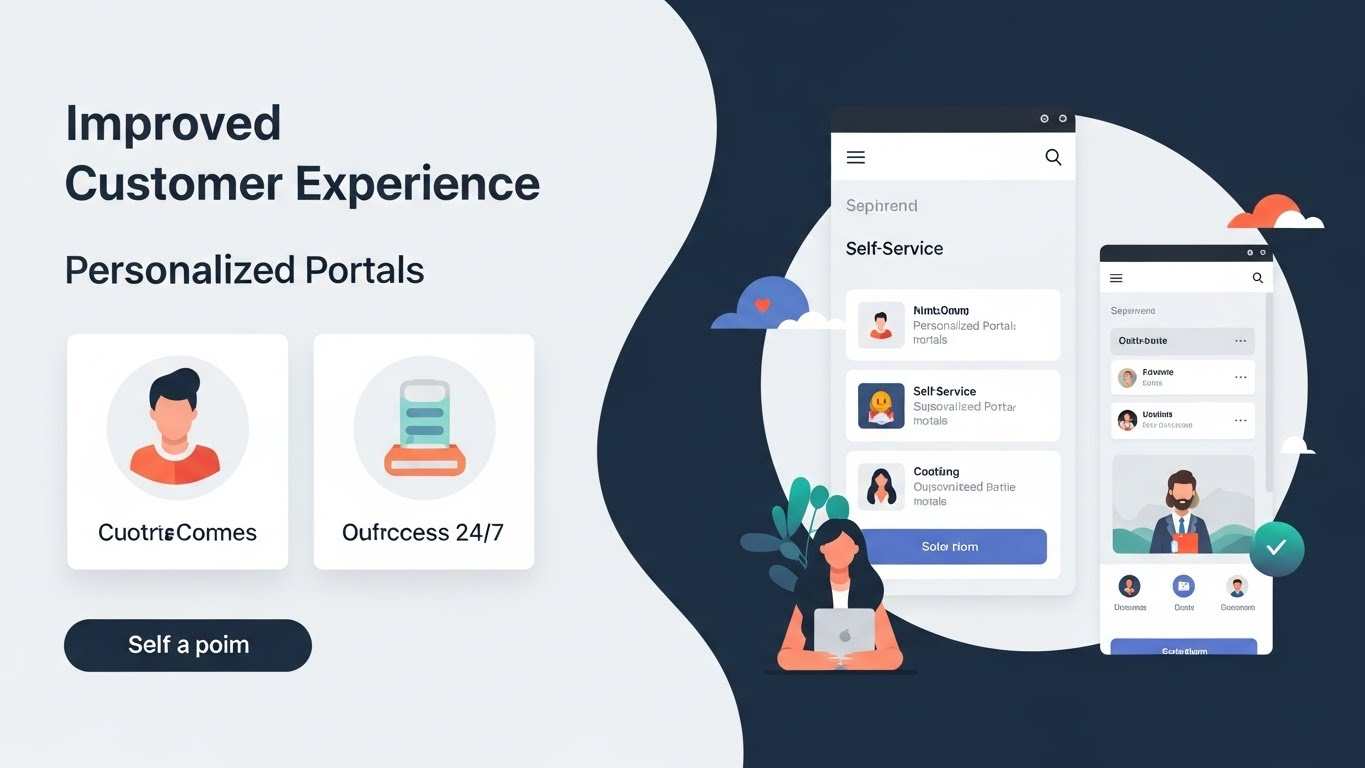
In the B2B world, relationships matter deeply. Buyers expect the same level of convenience and personalization they experience in B2C shopping. Modern eCommerce development services allow businesses to deliver just that, creating personalized experiences that build loyalty and increase satisfaction.
Personalization Strategies in B2B eCommerce

- Custom Pricing and Catalogs: Displaying client-specific prices, discounts, and product selections enhances the buyer’s experience.
- Self-Service Portals: Clients can place orders, track shipments, and download invoices at any time without contacting sales representatives.
- AI-Driven Recommendations: Intelligent algorithms can suggest complementary products based on previous purchases, increasing cross-sell opportunities.
A forward-thinking digital solutions brand leverages advanced personalization tools within its eCommerce platforms. They design interfaces that enable businesses to offer individualized product catalogs for each client, ensuring buyers see only relevant items. This not only simplifies navigation but also deepens trust between buyer and supplier.
An enhanced user experience doesn’t improve sales; it strengthens long-term partnerships by showing customers that their unique needs are understood and prioritized.
3. Better Data Insights and Decision-Making
Data is the backbone of every successful B2B strategy. With the right eCommerce development tools, businesses can collect, analyze, and act upon real-time data, leading to smarter decisions across all departments.
How Data Analytics Empowers Businesses
- Customer Behavior Tracking: Understand what products clients view, how often they purchase, and which factors influence conversions.
- Sales Performance Monitoring: Evaluate which products perform best to enable better inventory planning and promotional strategies.
- Predictive Insights: Anticipate demand trends and potential bottlenecks to optimize logistics and production schedules.
By partnering with a provider specializing in B2B ecommerce portal development services, companies can gain access to advanced dashboards that clearly visualize these metrics. For instance, a wholesaler can identify seasonal buying patterns and adjust pricing or inventory accordingly.
This level of insight ensures that businesses don’t just react to market changes; they anticipate them. Over time, data-driven decision-making leads to more efficient resource allocation, better forecasting, and improved profitability.
4. Scalability and Integration with Existing Systems

As businesses grow, so do their operational demands. One of the defining benefits of B2B eCommerce development services is scalability, the ability to expand your platform without major disruptions or costly overhauls.
Seamless Integration Capabilities
- ERP and CRM Systems: Connect your eCommerce site with existing enterprise systems to maintain unified data across departments.
- Payment Gateways and Shipping APIs: Simplify payment and delivery processes by integrating secure, trusted third-party services.
- Cloud-Based Flexibility: Cloud architecture enables you to handle increased traffic, new product lines, and global expansion effortlessly.
For example, Centric often focuses on creating flexible frameworks that grow with a company’s needs. Whether you’re scaling from a regional supplier to a global distributor, their solutions enable seamless integration with tools such as SAP, Salesforce, or Microsoft Dynamics.
Scalability isn’t just about growth; it’s about adaptability. As market dynamics shift, businesses must be able to pivot quickly. With an integrated eCommerce ecosystem, adding new features, payment options, or languages becomes straightforward, keeping your operations future-ready.
5. Increased Revenue and Long-Term Competitiveness
At the end of the day, every technological investment should contribute to business growth, and B2B eCommerce development services deliver precisely that. By enabling businesses to reach more clients, simplify purchasing, and automate repetitive tasks, these platforms directly influence both top-line and bottom-line performance.
Revenue-Boosting Advantages
- 24/7 Sales Capability: An online store never sleeps, allowing clients to place orders anytime and from anywhere.
- Expanded Market Reach: Attract global clients who may not be accessible through traditional sales channels.
- Reduced Operational Costs: Automation and digitization minimize manual labor, paperwork, and logistical errors, increasing margins.
A supplier, for instance, can use its eCommerce platform to target new regions without setting up physical offices. With well-planned marketing integrations and smooth user experiences, conversion rates improve while costs remain stable.
Moreover, adopting these technologies positions your business as an industry leader. In a world where digital transformation is accelerating, companies that embrace digital-first approaches not only gain revenue but also long-term competitiveness. They meet modern buyers’ expectations for speed, convenience, and transparency and outpace competitors who still rely on traditional models.
Practical Tips for Implementing B2B eCommerce Successfully

Before concluding, it’s worth noting that success in B2B eCommerce depends on strategy as much as technology. Here are a few practical recommendations for businesses considering development or optimization:
Key Implementation Tips
- Define Clear Goals: Identify whether your primary objective is efficiency, customer engagement, or global expansion.
- Choose Scalable Architecture: Opt for platforms that can grow alongside your business without needing constant redevelopment.
- Focus on User Experience: Invest in intuitive design and responsive functionality that simplifies navigation for B2B buyers.
- Prioritize Security: Implement SSL certificates, multi-factor authentication, and compliance with data protection regulations.
- Train Internal Teams: Ensure your sales and customer service teams are well-versed in managing digital transactions and interpreting analytics.
Partnering with experienced developers or solution providers who understand your industry can make the transition smoother. Expertise in B2B ecommerce portal development services helps ensure that your platform is not just functional but also strategically aligned with your business goals.
Conclusion
The digital transformation of B2B commerce is no longer optional; it’s essential. Businesses that invest in eCommerce development services gain access to efficiency, personalization, data insights, scalability, and new revenue opportunities that traditional models can’t match.
By understanding and applying the five advantages discussed, streamlined operations, enhanced customer experience, data-driven decisions, scalability, and revenue growth, organizations can future-proof their business and stay competitive in an increasingly digital world.

Welcome to NewsNetFlix! I’m Ali Nasir, an AI-Powered SEO, and Content Writer with 2 years of experience.